Heavy Sliding Doors China Supplier Wind Pressure Review
For heavy sliding doors from China, check inward and outward wind-pressure entries separately. Preserve the direction, sign, units and load basis before comparing numbers. A stronger return in one direction cannot make up for an unresolved requirement in the other.
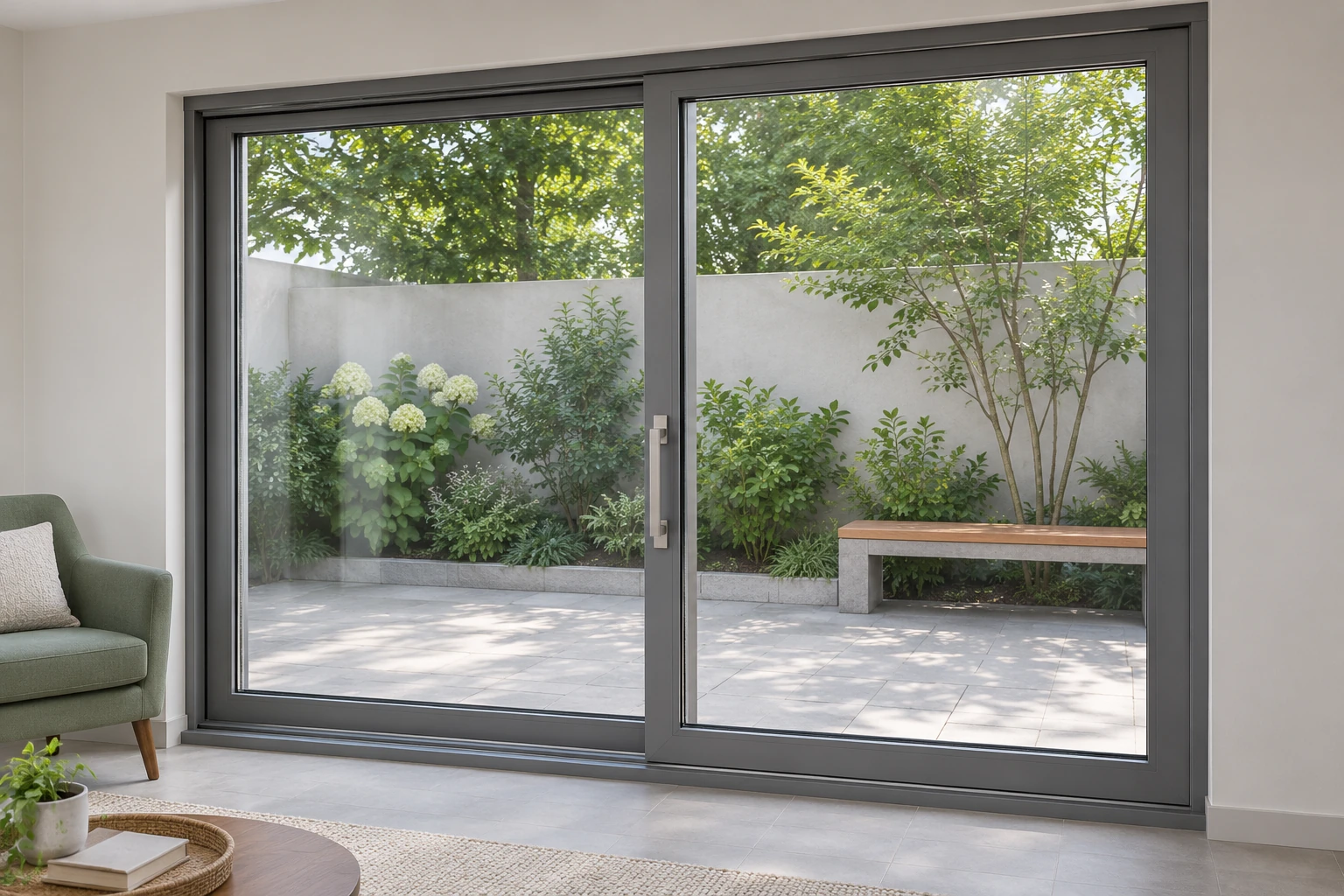
Start with the Opening, Not a Headline Rating
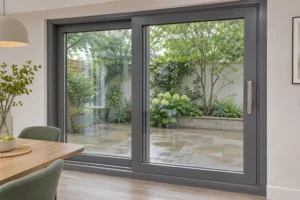
The RGNL-120 Series Thermal Break Sliding Door is the configuration baseline. Its published table describes an exterior heavy-duty sliding system, not a verified wind-pressure result for the proposed order. No model-specific structural rating or typhoon approval is established here.
The existing configuration and water-test pages answer different questions. This review adds a two-direction numerical screen: whether both required pressure entries are present and comparable before a quotation proceeds to technical acceptance.
Verified Configuration Baseline
| Published item | Evidence-matching boundary |
|---|---|
| Two-track 120 mm; three-track 183 mm | Identify the actual track and panel arrangement on the submitted record. |
| 6063-T5 aluminum; high-track selection | Match the quoted frame, sill and support condition. |
| Listed double tempered insulating glass: 5 mm + 15A + 5 mm | Identify the ordered glazing rather than borrowing another specimen’s result. |
These are configuration facts, not wind capacities. Frame width, glass thickness and a substantial appearance do not establish a project pressure rating.
Keep Direction Beside Every Signed Value
ASTM’s public E330/E330M-14(2021) description concerns structural response to uniform static pressure differences and discusses loading acting inward and outward. Its scope is the specified specimen, not adjacent construction. It does not establish resistance to windborne debris or cyclic loading.
Label the two directions in words on the opening schedule. Then retain the document’s sign convention. For the hypothetical worksheet below only, positive means inward and negative means outward. Do not assume that an unexplained sign or a bare pressure figure defines both directions.
Ask the responsible project designer to supply the opening-specific requirements and their basis. This page does not calculate wind loads, select design values or determine local compliance.
A Two-Direction Comparison Example
Hypothetical values only: suppose a worksheet requires inward +1200 Pa and outward -1800 Pa. These invented values are not project recommendations, test results or Rogenilan ratings. Assume compatible units and load bases solely to illustrate the arithmetic.
| Invented return | Inward / outward | Numerical screen only |
|---|---|---|
| Offer A | +1500 Pa -1500 Pa |
Inward figure exceeds the example requirement; outward magnitude is 300 Pa short. |
| Offer B | +1200 Pa -1800 Pa |
Both figures match numerically; technical applicability is still unapproved. |
| Offer C | +1800 Pa Outward not stated |
Incomplete pair. Request the missing direction; do not assume symmetry. |
Compare magnitudes within the same named direction. Outward 1500 Pa is less than outward 1800 Pa, even though the signed number -1500 is greater than -1800. Offer A’s extra inward 300 Pa cannot cancel its outward shortfall. Do not average the pair into one score.
Separate Numerical Screening from Acceptance
First confirm that the entries describe the same load basis. A reported proof-test pressure, a design requirement and an unexplained catalog figure are not interchangeable. Retain each original label; ask the technical reviewer to resolve the relationship instead of applying an assumed multiplier.
Next check applicability to the proposed door. Record specimen dimensions, fixed and moving panels, track arrangement, glass, hardware and installation support. A two-track specimen does not automatically establish the result for a three-track order.
Keep separate conclusions: the inward comparison, the outward comparison and evidence applicability. Mark missing information as unresolved, not zero capacity. A numerical match such as Offer B remains conditional until the responsible reviewer accepts the evidence and interfaces.
Retain a Traceable Pressure Pair
Use one record per opening mark and quotation revision. Keep the required pair beside the submitted pair, with direction labels, units, source page, load basis and any missing entry. Retain the original report rather than transcribing only its largest number.
Assign every discrepancy an owner and response date. If a revised panel layout or glass choice changes the proposed assembly, reopen applicability review even when the pressure figures have not changed. Close the record with the reviewer, decision and supporting revision visible.
Keep Evidence Scope in the Quotation
Ask whether the offered configuration and available evidence answer the specified pressure pair. List unresolved changes separately from the product price. Any proposed engineering review, documentation, specimen preparation or additional testing needs an agreed scope, availability and responsible party; no testing service or fee is promised here.
Do not rank an apparently cheaper offer as equivalent while one direction or the evidence basis remains missing.
Inputs for a Focused Pressure Review
- Opening marks, project location, dimensions and quantities.
- Designer-issued inward and outward requirements, units and load basis.
- Track layout, panel elevation, glass, hardware and support details.
- Quotation revision and submitted report references.
- Missing direction, unexplained sign or applicability questions.
- Responsible technical reviewer and required return date.
Wind-Pressure Review Questions
Does one pressure figure define both directions?
Not without an explicit direction and basis. Request separate inward and outward entries or a clear statement defining both.
Can extra inward capacity cover an outward shortfall?
No. Compare each direction separately. The hypothetical shortfall cannot be cancelled by surplus in the other column.
Is a matching pair sufficient to approve the door?
No. Check the load basis, specimen correspondence, supporting construction and project review before acceptance.
Does this confirm typhoon or hurricane suitability?
No. No RGNL-120 pressure rating, impact result or storm approval is verified here. Obtain project-specific requirements and applicable evidence.
Make Both Directions Explicit
Send Rogenilan the designer-issued pressure pair, door schedule and unresolved evidence questions. Request a configuration-specific response for technical review.