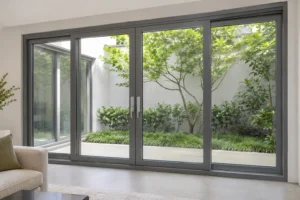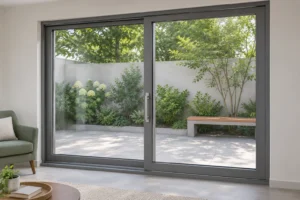
Sliding Windows China Supplier Package Volume Review
Calculate the outside package envelope in cubic metres, then check its dimensions and permitted orientation against the actual access path. Spare volume alone does not establish that a sliding-window package will fit.
Review Volume and Physical Fit Separately
For sliding windows from a China supplier, calculate package volume from final outside packing dimensions, then check the access path separately. A small cubic-metre total does not show that a package can pass through a loading aperture, retain its required orientation or occupy the planned position.
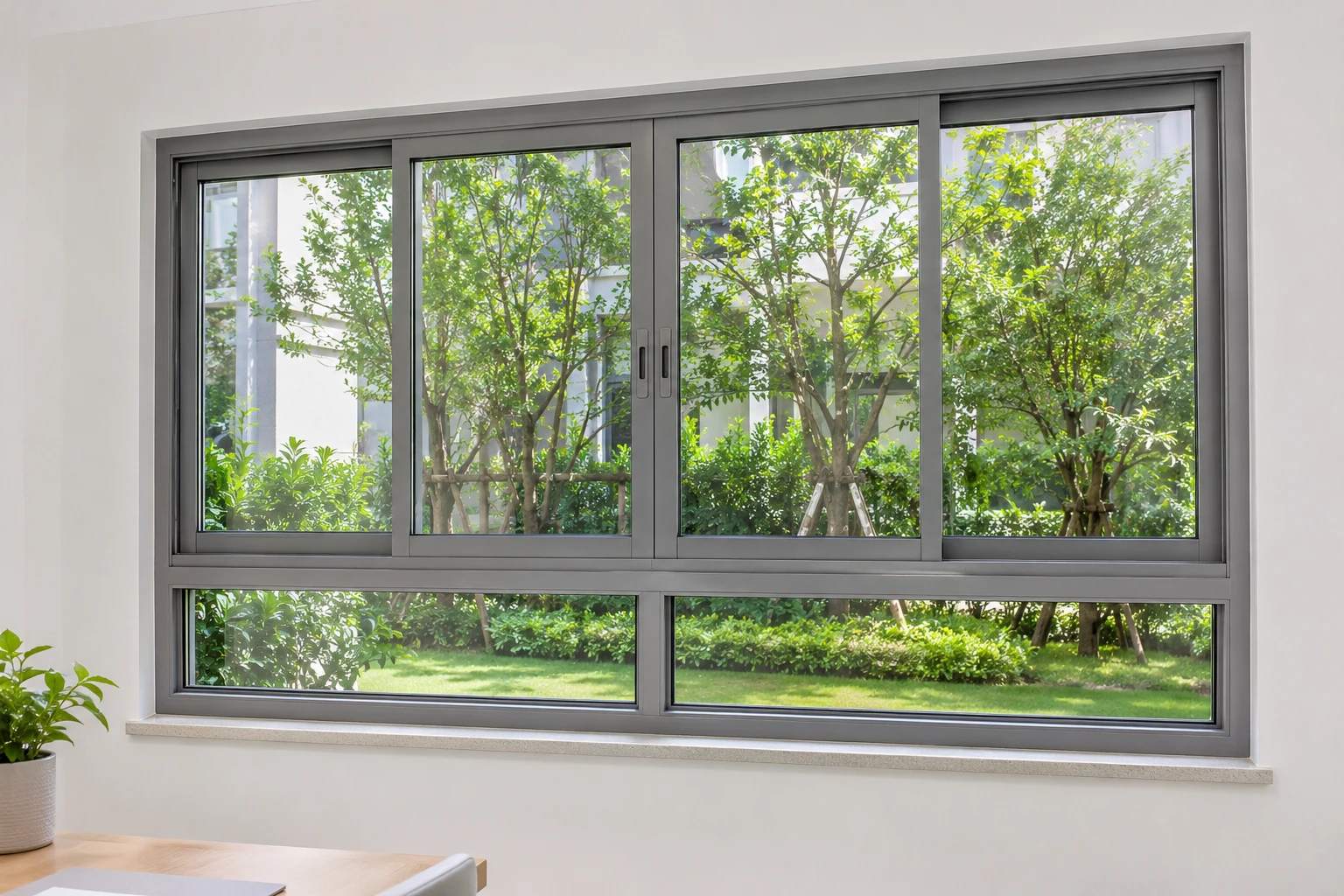
The RGNL-100 Series Sliding Window is the product reference. Its existing packing specification guide covers records and window-to-package mapping. This review adds cubic-volume arithmetic and a physical-fit counterexample, not another generic packing checklist.
Verified Product Starting Point
| Published RGNL-100 entry | Separate packing question |
|---|---|
| 100 mm system width | What is the finished package’s outside depth? |
| Two-track and three-track panel arrangements | Which layout is ordered, and how is it proposed to travel? |
| Alloy wire mesh listed | Is the selected screen within this envelope or separately packed? |
These entries do not establish crate sizes, protection allowances, packing methods or container quantities. The system width cannot be used as package depth. Conflicting thermal-break, thickness and glass descriptions are not used to invent a shipment specification.
Use Three Outside Lengths in One Unit
NIST identifies the cubic metre as the SI volume unit. For a rectangular bounding box, multiply outside length by outside width by outside height. Convert all three lengths to metres first; centimetres and metres must not be mixed in one multiplication.
If all three dimensions are recorded in centimetres, divide their product by 1,000,000 to obtain cubic metres. That factor comes from 100 centimetres per metre in each of three directions. Dividing by 100 only once after multiplying three centimetre values gives the wrong scale.
Retain the original dimensions, axis labels, units, package reference and revision beside the result. Request the final external envelope, including protection, supports and projections present in that package. State whether dimensions are preliminary or measured after packing.
A Hypothetical Package-Volume Calculation
All dimensions and counts below are invented arithmetic, not offered RGNL-100 sizes, actual packages, manufacturing limits or a customer shipment. Assume rectangular outside bounding boxes solely for this comparison.
| Example group | Outer size | Quantity | Extended volume |
|---|---|---|---|
| Group A | 2.10 m x 1.30 m x 0.25 m | 2 | 1.365 m3 |
| Group B | 1.20 m x 0.50 m x 0.40 m | 1 | 0.240 m3 |
| Total | Three invented packages | 3 | 1.605 m3 |
One Group A package is 0.6825 m3. Calculating from 210 cm x 130 cm x 25 cm gives 682,500 cm3, also 0.6825 m3. Keep intermediate precision and apply any agreed display rounding at the end. This does not establish a carrier’s billing or rounding rule.
The worksheet describes bounding volume, not the volume of aluminum or glass inside. Do not subtract air between protected components to obtain a smaller shipping envelope. Nor does the invented rectangle define an actual factory package design.
Why Spare Volume Does Not Resolve a Clearance Conflict
Consider a separate hypothetical example: a package must remain upright, and its agreed handling plan does not permit tilting. Its outside height is 2.00 m, while the relevant clear doorway height is 1.90 m. A low total volume cannot resolve that height conflict in the stated orientation.
This is not a container specification, lifting recommendation or rule that all windows must travel upright. The point is that an envelope and permitted orientation must be checked against actual access dimensions. Do not assume rotation solves a mismatch; request the responsible party’s reviewed arrangement.
The IMO CTU-Code overview addresses packing and securing as a wider operational task. This volume worksheet is not a loading or securing design. The sum neither selects a vehicle nor authorizes stacking, support points or handling equipment.
Recheck an OEM or ODM Packing Change
A changed panel arrangement, screen supply state or requested packing scope can alter the external envelope. Link the revised dimensional return to the window marks and quotation revision. Ask who prepares the return, confirms the final packing and reviews destination access restrictions.
These are buyer controls, not a claim that a particular OEM or ODM packing service is available. Do not retain a preliminary envelope merely because the window count stayed unchanged. Keep the earlier return and the accepted revision distinguishable.
Keep Freight Pricing Outside the Geometry
Request an offer against the agreed package data, destination and delivery boundary. Volume alone does not establish a freight charge, billed quantity, dimensional weight or container utilization. Confirm the logistics provider’s current commercial basis rather than applying an assumed divisor, minimum or rate.
Inputs for a Dimensional Return
- Exact window marks, layout, quantities and approved drawing revision.
- Proposed supply state and package contents, including separate screens.
- Outside length, width and height, units and measurement status.
- Actual access dimensions, obstructions and orientation restrictions.
- Destination, requested delivery boundary and responsible logistics reviewer.
Mark missing dimensions as unresolved. A spreadsheet that produces a volume from assumed inputs does not close a missing packing or access decision.
Package-Volume Questions
Can 100 mm system width supply package depth?
No. Obtain the actual outside packing dimensions; product width and protected package depth are different boundaries.
Does 1.605 cubic metres prove container fit?
No. It is invented bounding-volume arithmetic, not a physical loading arrangement or an actual shipment quantity.
Can a height conflict be ignored when volume remains?
No. Resolve the package envelope, permitted orientation and access path through the responsible review.
Does this establish a packing method or freight price?
No. Obtain an order-specific packing proposal and current logistics quotation with their scope clearly stated.
Request a Dimensional Packing Return
Send Rogenilan the controlled window schedule, requested supply state, destination and access restrictions. Ask for an order-specific dimensional return before using package volume in transport planning.