Aluminum Windows China Supplier STC and OITC Comparison
Do not rank window quotations by comparing an STC number with an OITC number. Confirm the required metric first, then compare evidence for the proposed complete assembly. Neither a glass description nor an unlabeled decibel figure establishes the result.

Start With the Acoustic Question
A developer may describe a road-facing apartment, while a hotel buyer supplies an acoustic schedule. Before selecting glazing, ask the project acoustic reviewer to identify the noise assessment, required metric, acceptance basis and openings concerned. A building description alone does not set a universal rating.
The RGNL-93 Broken Bridge System Windows product page is the configuration reference here. Its listed components are not a verified STC or OITC submission. This article explains how to compare requested evidence; it does not declare an acoustic rating for this product.
RGNL-93 Configuration Reference
| Published item | Order review |
|---|---|
| 93 mm system; 6060-T6 aluminum | Identify the exact frame and proposed sections. |
| Double or triple tempered; laminated, Low-E, reflective or tinted glass families | Return one complete build-up, not only a family name. |
| Inward, tilt-and-turn, outward or awning opening listed | Identify the selected mode for each window mark. |
Confirm the actual sash arrangement, glass, hardware and installation proposal together. No acoustic value is inferred from these entries, catalog symbols or the product URL wording.
STC and OITC Answer Different Comparisons
ASTM E413-22 describes single-number sound-insulation classifications; with laboratory measurements under E90, the rating is STC. Its stated applications include speech and similar sources. ASTM E1332-22 addresses outdoor-indoor assessment using a reference spectrum associated with transportation noise and defines OITC. The project reviewer should choose the applicable assessment rather than treating either abbreviation as a universal specification.
| Return received | What to do before comparison |
|---|---|
| STC with a laboratory report | Keep it in the STC column; confirm specimen and project relevance. |
| OITC with supporting data | Keep it in the OITC column; confirm the outdoor-noise assessment basis. |
| A number followed only by dB | Request the metric, method and original evidence; leave acceptance unresolved. |
| Glass-only information | Do not enter it as a complete-window result. |
E1332 cautions that equal single-number ratings can hide different frequency behavior. A final facade selection may need the frequency-dependent data and actual noise spectrum, not just the headline number. This is not a formula for converting STC into OITC.
Use a Separate-Metric Review Sheet
Hypothetical paperwork example only: Offer A states STC 40; Offer B states OITC 32. These are invented review entries, not Rogenilan results, project targets or offered configurations.
Entering both under one heading called “soundproof rating” would create a misleading ranking. Record A under STC and B under OITC. Mark the other cell “not supplied,” not zero. Ask for evidence against the same project-required metric before deciding whether either offer is acceptable.
Give each return its own row with these fields:
- Window mark, drawing revision and proposed size.
- Required metric and project criterion, supplied by the reviewer.
- Submitted metric, value, method and report reference.
- Evidence scope: glass, complete window or another assembly.
- Quoted versus reported frame, glass, sash and hardware.
- Outstanding questions, responsible person and review decision.
Use separate statuses such as received, scope queried and accepted by the project reviewer. Receiving a report is not the same as approving its use. Keep the original file attached so later changes do not erase the evidence behind the decision.
Close the Gaps Before Product Selection
For RGNL-93, send the selected opening mode and full glazing proposal with the review sheet. If the submitted specimen differs, request an explanation of applicability; do not silently transfer a result from a different size, fixed unit or glass package.
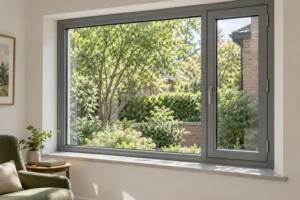
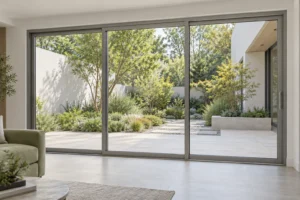
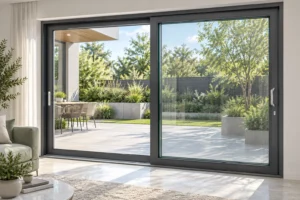
If evidence is unavailable, retain that gap in the quotation comparison. Ask the project team whether another configuration or an agreed evaluation is required. Do not replace a missing report with a sales description or promise that an illustrative room scene demonstrates the outcome.
Compare the Quoted Review Scope
Separate the physical window offer from requested documentation, sample preparation, evaluation, packing and delivery. Ask which items are included, excluded or awaiting agreement. A requested report or test is not automatically an available service, and no testing price, lead time or passing result is assumed here.
What to Send With the Enquiry
Provide project location, opening marks, dimensions, quantities, selected mode, glazing build-up, finish reference and drawings. Attach the acoustic brief, named metric, acceptance criterion and available noise assessment. Request an itemized return showing evidence available for the proposed assembly and every unresolved scope difference.
Questions Before Ordering
Can STC 40 be ranked above OITC 32?
Not from those numbers alone. They are different metrics. The example is hypothetical; request the same project-required metric and comparable evidence.
Does double or triple glazing prove a window rating?
No. A glass-family description does not establish a tested complete-window result. Request the relevant assembly evidence.
Is an RGNL-93 acoustic rating verified here?
No. This page verifies configuration references and explains a procurement review method, not a model-specific acoustic result.
Who sets the required acceptance criterion?
The project team and its qualified acoustic reviewer should define the requirement and assess the submitted evidence for the application.
Request an RGNL-93 Configuration Review
Send the window schedule and acoustic brief so Rogenilan can review the proposed configuration and identify available information and outstanding questions before quotation approval.