Heavy Sliding Doors China Supplier Glass Reflection Review
Review glass reflections under matched viewing conditions, not selected photographs. Keep transmission, reflection and instrument evidence separate before approving a representative glazing reference for repeated doors.

Glass Reflection Review Before Repeating a Door Order
When sourcing heavy sliding doors from a China supplier, agree how glazing appearance will be viewed before approving a sample for repeated production. Separate the view through the glass from the image reflected by its surfaces. Keep the viewing position, lighting, background and proposed glass construction consistent when comparing samples.
The RGNL-120 Series Thermal Break Sliding Door is the product reference. Its existing configuration review addresses matching tracks and drawings. This review adds a repeatable visual-observation record, not an optical rating, a universal rejection limit or a promise of distortion-free glass.
Verified Product Starting Point
| Published RGNL-120 entry | Visual-review boundary |
|---|---|
| Two-track width 120 mm; three-track width 183 mm | Identify the actual panel arrangement and viewing side. |
| 6063-T5 aluminum; high-track selection | Review glass appearance separately from frame geometry and passage. |
| Double tempered insulating glass: 5 mm + 15A + 5 mm listed | Confirm the proposed complete unit, treatments and any coating. |
These entries do not establish optical tolerances, a supplied sample size or a test result. A reflected image does not mean a reflective coating has been selected. Do not add an unconfirmed coating or glass treatment to explain a photograph.
Distinguish Transmission from Reflection
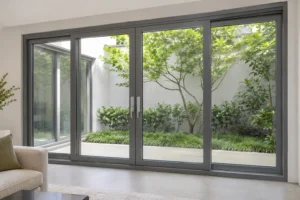
In a transmitted view, the observer looks through the glazing at objects beyond it. In a reflected view, the observer assesses an image returning from the glass surfaces. Record which question a photograph is intended to show; a clear courtyard view does not document every reflected image.
NGA’s glazing manual, printed page 19, explains that surrounding scenes affect perceived reflected distortion. It recommends representative full-size mock-ups under typical project conditions and keeping the reviewed glass for reference.
Use that distinction to define the buyer’s observation brief, not to diagnose a particular door. A wavy-looking line in one image does not by itself identify its cause or establish whether the supplied glazing meets an agreed requirement.
Build a Repeatable Viewing Record
Give each proposed view an identifier linked to the door mark, glass code, sample identity and drawing revision. Agree safe, accessible observation positions and record the following conditions before comparing returns.
| Record field | What the return should identify |
|---|---|
| Observation | Transmission, reflection, or separate records for both. |
| Position | Viewing side, marked location, direction and recorded distance. |
| Scene | Objects beyond the glass or the particular reflected background. |
| Conditions | Lighting, sky, shading and date/time relevant to that observation. |
| Glazing | Full construction, sample dimensions, orientation and supply state. |
| Decision | Reviewer, agreed reference, observations and unresolved questions. |
These are proposed procurement fields, not standard inspection distances or an approved test method. Ask the responsible reviewer to define the actual project criteria. If a view cannot be reproduced, retain that limitation rather than marking it equivalent.
Compare Like Conditions, Not Selected Photographs
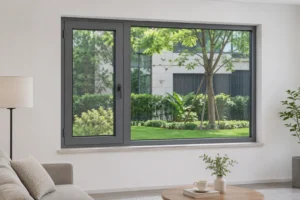
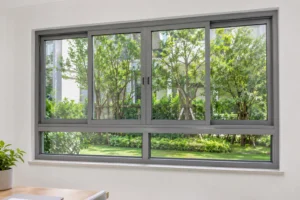
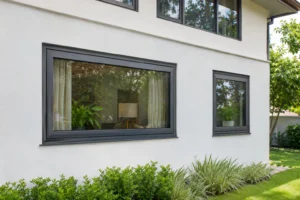
Consider a hypothetical review: Image A shows a near-straight view with mostly sky reflected in the glazing. Image B shows an oblique view reflecting closely spaced building lines. No actual sample, customer project or defect is asserted by this example.
The two images do not isolate glass quality because more than the sample has changed. Ask for both samples to be reviewed against the same recorded views and backgrounds. Preserve the original photographs and identify the sample and conditions beside each one; a favourable crop should not replace the observation record.
Separate observations from decisions. For example, record that a reflected line appears displaced in a named view, then leave cause and acceptability to the responsible review. Do not relabel an unexplained image as a failed production test or a confirmed installation defect.
Keep Instrument Results Within Their Scope
NGA technical paper FB18-08 describes optical-distortion measurement methods intended for in-plant use. It explicitly excludes applying those methods to vertical field glazing or insulating glass units.
Therefore, a phone photograph of an installed insulating unit is not a measurement under that paper. If instrument data is proposed, ask what was measured, on which component, by which method and at what production stage. Do not transfer a single-pane result automatically to the assembled door.
This worksheet supplies neither an optical acceptance number nor a blanket decision that visible distortion is acceptable. Resolve the specified reference, method and applicable criteria before relying on a numerical report or appearance approval.
Control an OEM or ODM Appearance Change
For an OEM or ODM enquiry, assign responsibility for proposing the glass construction, preparing any requested sample and approving its appearance. Ask which services and representative assemblies are available; none is promised here.
Keep the reviewed sample or an agreed traceable reference where feasible. Reopen the affected review if glass construction, coating, pane dimensions or orientation changes. A small finish sample cannot silently become approval for the reflected appearance of a complete glazed panel.
Agree the Visual-Review Scope in the Quotation
Separate product supply from requested sample fabrication, mock-ups, documentation, technical review, retention and transport. Confirm availability, responsibility, cost and timing in writing. No sample price, lead time, optical guarantee or factory measurement capability is established here.
Send a Defined Appearance Brief
- Door marks, quantities, selected tracks and panel elevations.
- Complete proposed glass construction and relevant revisions.
- Transmission and reflection questions with marked viewing positions.
- Background, lighting and sample scope required for comparison.
- Retained reference, review owner and unresolved acceptance questions.
Review the Sliding Doors range against that brief, without treating a rendering as the appearance standard for supplied glass.
Glass Reflection Questions
Does a clear view through glass prove reflected quality?
No. Record transmission and reflection separately under the agreed viewing conditions.
Can two different photographs rank samples fairly?
Not when viewing conditions differ. Request matched observation records before drawing a conclusion.
Can a phone image replace an in-plant measurement?
No. A qualitative field photograph is not the measurement described in the cited technical paper.
Is distortion-free RGNL-120 glazing promised?
No. Agree the actual glass proposal, visual reference and review criteria for the order.
Request a Traceable Glazing Review
Send Rogenilan the door schedule, proposed glass construction and viewing brief. Ask which representative samples and records are available before accepting an appearance reference.