Heavy Sliding Doors China Supplier IGU Elevation Brief
For heavy sliding doors from a China supplier, send the glass fabricator the manufacturing, route and installation locations before approving insulating glass units (IGUs). Endpoint-only information can omit a route high point; a product name does not establish a safe elevation change.
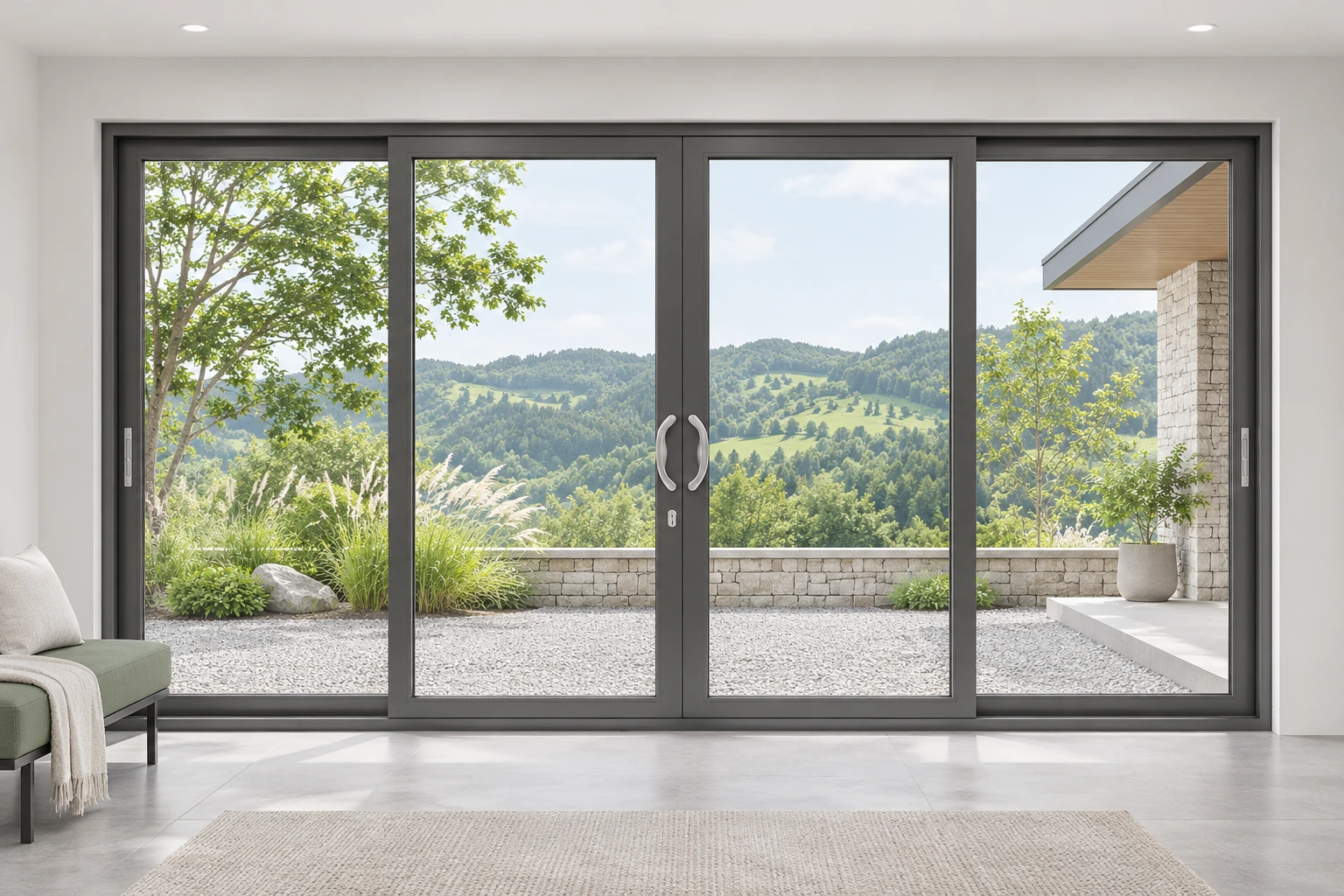
IGU Elevation Brief for a China Supplier
Before approving an insulated-glass door order, identify where the units will be fabricated, how they will travel and where they will remain installed. A destination address alone may omit a higher point on the transport route. Record unknown information as unresolved rather than assuming a coastal port represents the whole journey.
The RGNL-120 official product table provides the product starting point, not an elevation clearance. Its double-glazing entry does not establish a permitted altitude change, pressure-management arrangement or route approval.
Published Product Facts and Their Limits
| RGNL-120 entry | Procurement boundary |
|---|---|
| 120 mm two-track; 183 mm three-track width | Identify the proposed door arrangement separately from the route. |
| 6063-T5 aluminum; high-track selection | These frame entries are not IGU pressure limits. |
| Double tempered insulating glass: 5 mm + 15A + 5 mm | Obtain the complete proposed glass construction and fabricator review. |
The page does not confirm a specific gas fill, capillary tube, valve, elevation threshold or handling procedure for the proposed order. Do not add any of them to the purchase description as an assumed standard inclusion.
Why Elevation Belongs in the Enquiry
NGA’s glazing manual, printed page 41, explains that sealed IGU cavities respond to temperature and pressure changes. It flags transport through high elevations for individual fabricator consultation.
NGA’s 2024 joint-guidance announcement identifies elevation change between manufacture and installation as a pressure-difference issue. It also identifies gas fill, temperature and pressure as relevant considerations.
Those sources explain why to request a review. They do not approve RGNL-120 for a particular route or instruct a buyer to modify a sealed unit. Keep the requested technical decision with the responsible glass fabricator and project reviewer.
Build a Location and Responsibility Register
| Stage | Return needed |
|---|---|
| Fabrication | Actual IGU fabrication location, elevation reference and glass identity. |
| Transport | Proposed route, relevant high points, transport mode and changes still unresolved. |
| Storage | Planned intermediate locations and information requested by the fabricator. |
| Installation | Site location, elevation and the condition to which the technical review applies. |
| Responsibility | Who supplies route data, reviews it, authorizes release and communicates changes. |
Use one unit system and identify the source of each entry. A city name, estimated map point or building-floor number should not silently become a verified fabrication or site elevation. Have the responsible party confirm the location information used for the decision.
Do Not Compare Only the Two Endpoints
Consider a hypothetical worksheet, not a Rogenilan shipment: fabrication is entered as 100 m, a route high point as 1,600 m and installation as 700 m, all against the same stated reference.
| Simple difference | Illustrative result |
|---|---|
| Installation minus fabrication | 700 – 100 = 600 m |
| Route high point minus fabrication | 1,600 – 100 = 1,500 m |
The larger route entry would be missed by an endpoint-only brief. These subtractions organize information; neither result is a safe limit, pressure calculation, glass-design check or instruction to fit a device. The reviewer needs the actual unit construction and journey conditions, not just the biggest number.
Request a Written, Order-Specific Return
Ask which route and installation assumptions the glass proposal covers, what remains unresolved and what restrictions or instructions apply. The response should identify the glass fabricator, relevant unit marks, complete construction and responsible reviewer.
If a pressure-management arrangement is proposed, request its written design, handling, access and completion requirements from the responsible fabricator. Do not prescribe drilling, opening, sealing or altering an IGU from a general article. Ask whether the proposed arrangement changes the quoted construction, evidence, handling responsibilities or written warranty terms; no particular consequence is assumed here.
Carry OEM/ODM Changes Back to the Brief
For an OEM or ODM enquiry, assign responsibility for collecting logistics information and approving the glass proposal. Ask which party controls the specification and communicates a revised route. These are contractual questions, not confirmation that private labeling, independent design or a particular engineering service is offered.
A replacement glass build-up, fabrication location, route or installation location should be sent back to the responsible reviewer. Keep the previous decision and the revised return together; a copied approval line does not prove that changed assumptions were reviewed.
Separate Review Costs from Freight Charges
Ask the quotation to distinguish product supply, any proposed technical review, any approved special arrangement, handling instructions and transport scope. Identify exclusions and who arranges each activity. This guide supplies no price, lead time or promise that a particular solution is available.
Use the existing shipping-weight review for package mass boundaries. Weight reconciliation does not replace an IGU route review, and an elevation brief is not a loading or lifting plan.
Send These Inputs for Review
- Door marks, quantities and proposed panel arrangement.
- Complete IGU description and fabrication identity.
- Fabrication, route, storage and installation locations.
- Elevation entries, units, references and unresolved points.
- Requested reviewer, return documents and release responsibility.
- Change-control process, supply exclusions and destination.
IGU Elevation Brief Questions
Does a low-elevation destination remove the route question?
No. Record relevant points along the proposed journey as well as the installation location, then request a fabricator-specific assessment.
Does the product table confirm capillary tubes?
No. The cited RGNL-120 table does not confirm a device or pressure-management method for the proposed order. Request a specific written return.
Can the example differences establish a safe altitude?
No. They are hypothetical information checks only, not glass design, pressure limits or evidence of product suitability.
May the installer alter the unit using this guide?
No. Obtain the responsible fabricator’s applicable written instructions and project review. This article gives no field-modification procedure.
Request a Route-Specific Glass Review
Send Rogenilan the proposed door and IGU schedule, locations, route inputs and unresolved points. Ask who will review the actual glass proposal and confirm the resulting supply and handling boundaries.